703-828-4814 | titanpondliners@gmail.com
Best Liner for Farms in the Southeast
Blog post description.
Choosing the Right Liner for Long-Term Water Retention
In the Southeastern United States, farm ponds face unique challenges. Sandy soils, high temperatures, and long dry periods can lead to significant water loss if a pond is not properly sealed.
Whether you’re building an irrigation pond, livestock watering system, or catfish farm, choosing the right pond liner is critical to long-term performance and cost efficiency.
Why Unlined Ponds Lose Water
Many agricultural ponds in the Southeast rely on natural clay soils to hold water. The problem is:
Clay varies widely from site to site
Soil can crack during dry periods
Sandy or porous ground allows seepage
Water loss increases operating costs
Even a small amount of seepage over time can result in thousands of gallons lost.
Why HDPE Pond Liners Are the Best Choice
HDPE (high-density polyethylene) geomembrane liners are widely used in agriculture because they provide a consistent, engineered solution for water containment.
Key Advantages:
Near-zero permeability – keeps water where it belongs
Long service life – often lasts decades
UV resistance – performs well in Southern climates
Chemical resistance – suitable for fertilizers and runoff
Scalable for large ponds – ideal for 1/4 acre and up
Unlike clay sealing, HDPE liners deliver predictable, long-term results regardless of soil conditions.
👉 For installation details, see our Agricultural Pond Liner Installation page.
HDPE vs Clay: What’s the Difference?
Clay-Sealed Ponds:
Lower upfront cost
Inconsistent performance
Susceptible to cracking and drying
Requires ongoing maintenance
HDPE Lined Ponds:
Higher upfront investment
Reliable, engineered barrier
Minimal water loss
Long-term cost savings
For farms that rely on consistent water supply, HDPE quickly pays for itself.
Ideal Applications for HDPE Liners in Agriculture
HDPE liners are used across a wide range of farm applications:
Irrigation ponds
Farm water storage reservoirs
Livestock watering ponds
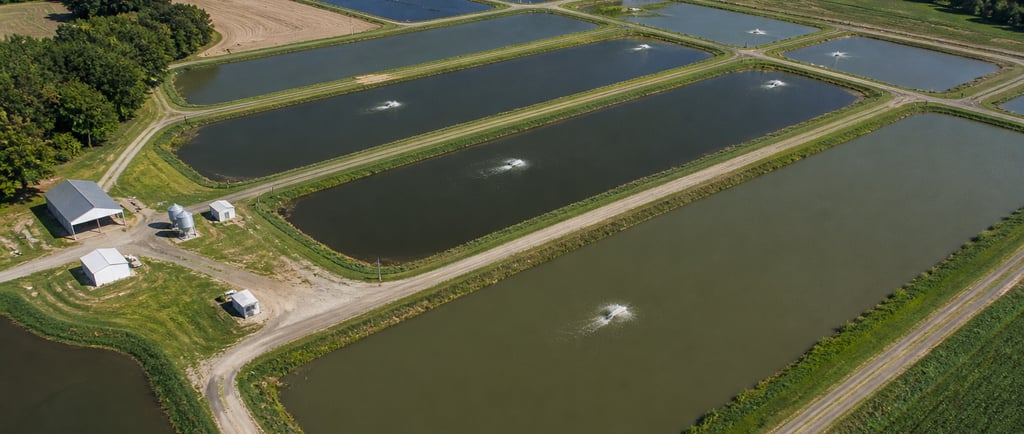
Catfish and aquaculture ponds
Agricultural runoff and containment systems
Catfish Farms & Aquaculture Applications
Catfish farming and aquaculture operations depend on consistent water levels and controlled environments.
HDPE liners provide:
Reliable containment across multiple pond systems
Reduced seepage between levees
Better water management and control
Compatibility with aeration and filtration systems
For operations running multiple ponds, liner consistency becomes even more important.
What Thickness Liner Do You Need?
The right thickness depends on:
Pond size
Soil conditions
Intended use
Equipment or traffic near the pond
Typical agricultural applications use:
30 mil – lighter-duty or smaller ponds
40 mil – common standard
60 mil – heavy-duty, long-term installations
Choosing the correct thickness ensures durability and long-term performance.
Long-Term Value of HDPE Liners
While HDPE liners require a higher upfront investment, they significantly reduce:
Water loss
Maintenance costs
Rework and repairs
Downtime for irrigation systems
Over time, this makes them the most cost-effective solution for serious agricultural operations.
Final Thoughts
For farms in the Southeast, water is too valuable to lose to poor soil conditions or unreliable sealing methods.
HDPE pond liners provide a proven, long-term solution for irrigation, livestock, and aquaculture systems—delivering consistent performance regardless of site conditions.
Get Help With Your Pond Project
If you’re planning a pond or dealing with water loss, professional installation makes all the difference.
Learn more about our Agricultural Pond Liner Installation services or contact us to discuss your project and request a quote.
Get it done right the first time.
When water containment matters, installation quality matters. Work with a team that specializes in HDPE geomembrane systems built to last.
© 2025. All rights reserved.